.png)


Getxent Tubes Explained: The Science Behind Polymer Odor Capture & Release (...and whether they really pick up stray odors) || Precision Explosives

Hello, science lovers!
Ever since Getxent hit the market and made their way into the detection dog world, seems like everyone has an opinion. Many swear by it - easy to hide, convenient, real odor, no licensing. Others are convinced that the training aids have the power to soak up every odor in the room. As a trainer myself, I get it - you want to make sure your dog is working on the intended odor - nothing more, nothing less.
So let's do the thing we always do here: look at what a Getxent tube actually is, what the science says, and then answer the question we get asked all the time - “do these tubes take on odors over time?” The details of this one are worth understanding because it also explains how to use them correctly.
What is a Getxent Tube?
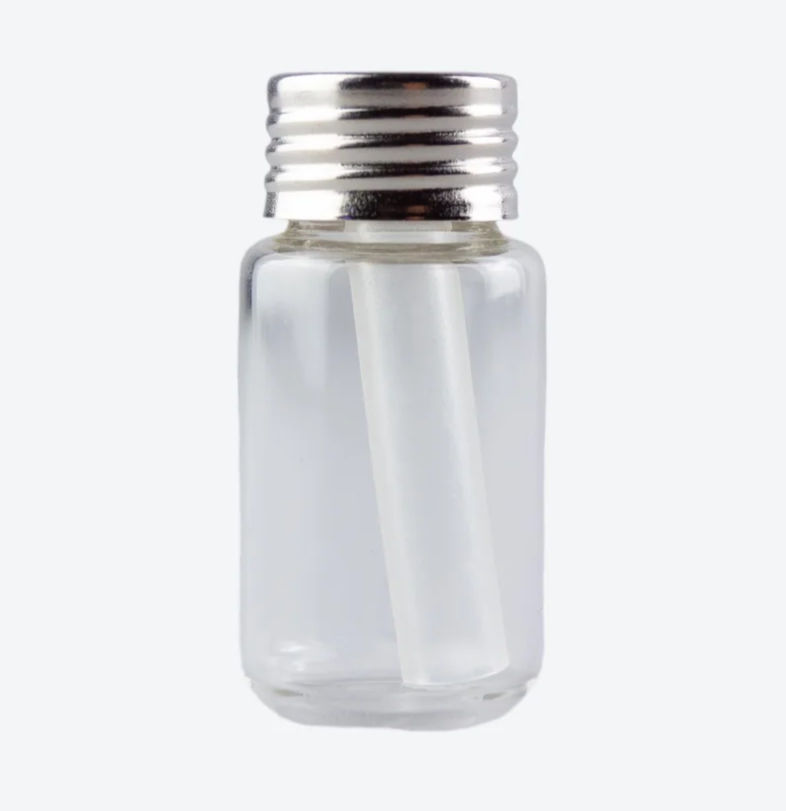
A Getxent tube is a small cylinder - about 8x35mm - made from a fancy polymer (Polymer Odor Capture and Release, or POCR) that captures odor molecules and then releases them slowly over time. The magic part of it is the material behaves like an odor sponge that you charge once and use for months.
Charging it (“impregnation” in Getxent’s language) is refreshingly low-tech. You put a blank tube in a small, sealed, odor-free container along with your target material and you wait. The two do not touch each other, the tube just absorbs the volatile odor molecules coming off the source. Getxent’s rule of thumb is that longevity tracks charging time almost one-to-one: a 48 hour soak buys you 48 hours of training time. Tubes soaked for 7 days are rated for about 150 hours of use. All with no contact with the source material itself, no residue left behind, and no license needed for the finished training aid!
The amazing part of this when it comes to detection dogs is if a dog can smell it, odds are someone has put it in a Getxent tube! They are used for explosives dogs, narcotics, human remains, currency, electronics, bed bugs, mold, invasive species, as well as medical and analytical research!
Why Handlers Like Getxent Tubes
The main reasons come down to two things you can’t easily get from real source material: safety and consistency.
The appeal is obvious for anything hazardous. A Getxent tube impregnated with TATP odor smells like TATP to the dog but isn’t detonable, isn’t reactive, and won’t expose your dog or the handler to the source material. Same logic applies to fentanyl, where a whiff of the material is a genuine hazard, as well as for materials that are pathogens or give off decompsition odors you’d rather not casually store in your vehicle. Getxent states the tubes are safe for a dog to touch, bite, lick, or even swallow, and that independent lab testing found no bacterial or fungal growth on the material. Getxent is an easy sell to anyone who has tried to run training scenarios in a public venue with real source material.
Consistency is just as important. A dog learns whatever you present during imprinting. If your training aid is contaminated in any way (off-gassing solvents, manufacturing residue, etc), you’re teaching your dog the wrong odor picture. This is where POCR has the strongest independent evidence in its corner, so let’s get into it.
Yay, Science
This isn’t even marketing, its peer-reviewed forensic chemistry (some of it even paid for by the FBI!).

In a 2022 study in Forensic Chemistry, Alison Simon used SPME-GC-MS to analyze the headspace of eight non-hazardous TATP training aids. Getxent’s headspace contained only TATP - no acetone, no diacetone diperoxide, none of the mystery compounds that showed up in some competitors. In addition to that, of the products that even bothered to supply a blank training aid for comparison, the Getxent blank contained the lowest background odor of any aid tested. Clean target odor, clean blank. Good stuff!
The broader POCR approach has been validated with dogs, not just instruments. A separate Simon-led team ran a polymer odor capture-and-release TATP aid through both chemical analysis and blind canine testing across naïve and experienced dogs, and concluded it delivers target odor at a known, reproducible rate suitable for initial training, maintenance, and keeping operational dogs sharp. Follow-up work using real-time DART-MS showed the polymer releases odor in a controlled, restricted way that behaves like the real material through a vented lid - which is exactly the behavior you want from a training aid. The same group even published an open-access method paper laying out how a training aid should be validated, and made a point most manufacturers avoid: too many aid makers never release the data to prove their product is clean. Getxent's willingness to be measured, in public, by outside labs is the differentiator worth considering!
There's also a standards angle. The NIST-affiliated OSAC Dogs and Sensors Subcommittee published a standard for training-aid use (2024-S-0023) that calls for blank aids in your line-ups and recommends letting a hide settle for about 30 minutes before running it. Getxent's material fits that framework, and every batch goes through GC-MS quality control before it ships.
The Big Question: Do Getxent Tubes Take on Other Odors?
Now the part everyone actually asks about. The worry goes like this: if this polymer is basically an odor sponge, then during a search it must be quietly sponging up whatever else is in the environment - the handler's cologne, the car, the last thing it sat next to - and slowly turning into an impure, unreliable aid. It's a fair concern!
It's mostly not true, and the reason is worth understanding.
Start with the distinction between adhesion and absorption. Odor molecules - or dust, or oils from your fingers - can stick to the outside surface of a tube. That's adhesion, and it's real. What people fear, though, is absorption: the odor being drawn deep into the polymer and becoming part of what the tube emits. Here's the key: an impregnated tube's odor-holding sites are already occupied. It spent its charging week filling those cells with your target odor. A material whose capacity is already taken up has very little room to draw in something new, and over the short window of a single search - minutes, not days - meaningful uptake of a fresh environmental odor into a loaded tube just doesn't happen to any degree a dog would notice.
Getxent puts it in terms of odor flow - “Impregnated Getxent tubes will not absorb external odors during training when used correctly and within the time frame specified. The outward flow of target odor molecules prevents contamination, as external odors cannot enter the tube against this flow. As long as the outward flow remains stronger, the tubes stay free from contamination." The mechanical picture underneath that statement is the occupied-sites one: while the tube is loaded and actively emitting, the traffic at its surface is overwhelmingly outbound, and a full polymer has almost no free capacity to pull new odor inward. Same conclusion, and it's the version a forensic chemist will accept without argument.
That framing also explains the thing handlers actually notice - why the tubes "expire." A tube doesn't stop working because the polymer breaks down. It stops because it runs out of the odor it was charged with. Once those occupied cells are exhausted and the outbound flow fades, the capacity that was full is now empty again - and an empty polymer will start behaving like a blank tube and taking on whatever's around it. Getxent has observed exactly this kind of pollution in tubes pushed past their impregnation window (standard seven-day, ~150-hour tubes). That's the real reason to respect the expiration: not that the tube goes stale, but that a spent one loses the very property that was keeping it clean.
This means the key is to use them correctly and within the time frame. Handle tubes with metal tweezers, not bare fingers, so skin oils never adhere in the first place. Store each tube in its glass vial between sessions - not loose in a pocket, no Ziplocs, and never back in the container with the target material after it's been used. Don't run a tube past its rated life. Do those things and the "won't take on odor" claim holds. Skip them and you're inviting the exact contamination you were worried about - which, honestly, is true of not just Getxent tubes but of every training aid, real material included.
And if something does end up on a tube - mud, dust, a stray contaminant - you're not out a tube. Getxent says you can clean an impregnated tube with plain tap water and let it fully dry before storing. Simple as that!
Where Getxent Fits in Your Training Program
What it does exceptionally well is give a green dog a clean, safe, high-quality odor to imprint on, and give an operational dog realistic reps in places you could never bring real material - an airport, a school, a running vehicle. The odor intensity from a freshly charged tube is high enough to make imprinting easy, and if you need more, you can easily stack several tubes in one hide.
The tubes also pair naturally with a TADD when you want maximum control over odor delivery and protection, and they slot in alongside our Odor Print media when you're building out a full odor library. If you want to run your own scents, blank tubes let you charge whatever your program needs. We carry Getxent tubes in narcotics, explosives, mold, and a range of unconventional odors - currency, human remains, bed bugs, electronics, and more - over on our Getxent tubes page.
The bottom line on the contamination question: a properly impregnated Getxent tube, handled with tweezers, stored in its vial, and retired at the end of its rated life, is not going to quietly absorb the room and lie to your dog. The chemistry and the FBI-funded lab data is on your side!
Trust your dog. Trust the science.

Comments